

The Taif Rose: A Cultural Emblem Reaching Beyond Its Homeland to UNESCO's Global List
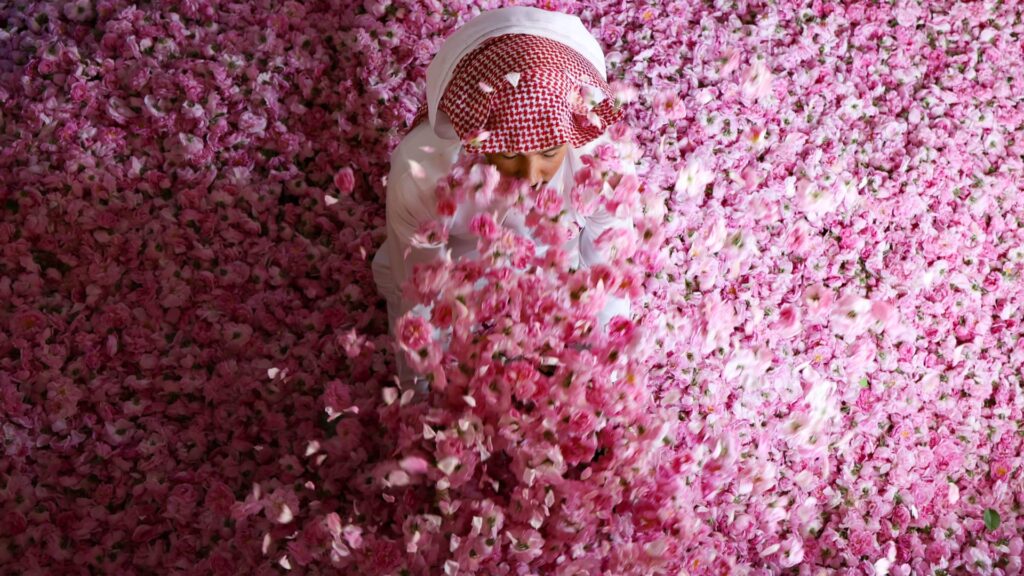
The Taif rose, renowned for its petals, aromatic oils, and luxury perfumes, has crossed the boundaries of valley and mountain to join UNESCO's global cultural heritage list. Growing in the heights of Al Hada, Wadi Muharram, Wadi Ghazal, Wadi Qawa and its highlands, Tuwayriq, and Al Shafa, the Taif rose is a heritage icon with a long history of adornment and a cultural influence recognized worldwide. Its growers have developed its traditional cultivation, giving its sweet fragrance a lasting place in the history of cultural heritage.
Since its beginnings, the Taif rose has remained part of history, rooted in the region's heritage and civilization and closely connected to its people. Taif's fertile land provides the ideal environment for generations to inherit the care of the rose: picking it, distilling it, and extracting its oil and water. They enjoy its fragrant legacy amid the mild coolness and breathtaking mountain scenery atop the famous Mount Ghazwan. Its products came to be used in the annual washing of the Holy Kaaba and by many segments of society, foremost among them kings and prominent Gulf families.
When the Taif rose first grew high in the mountains, its bushes and farms were few, farmer Raddad bin Raddah Al-Talhi told the Saudi Press Agency (SPA). As the rose developed and its cultivation spread, it became a distinctive investment segment worth more than SAR 64 million in the Saudi market. Farms in the Sarawat Mountains harvest approximately 550 million roses annually, and more than 910 Taif rose farms are spread across the governorate. Around 70 factories and workshops extract and manufacture more than 80 rose-derived products, which enjoy wide market popularity. He explained that Taif rose processing and distillation have long followed advanced fundamental steps based on a precise, established method. Roses grown in the farms' soil are first placed in carefully selected copper pots to begin distillation. Copper is specifically used because it produces a marked rise in temperature compared with other metals, saving time and effort and improving returns; most derivatives are extracted through the high heat these pots provide. He noted that the process produces three products: ordinary, unconcentrated rose water; concentrated rose water, known as bridal water; and rose oil, the most expensive in the world.