
At-Turaif District … Five Centuries of History and Najdi Architecture
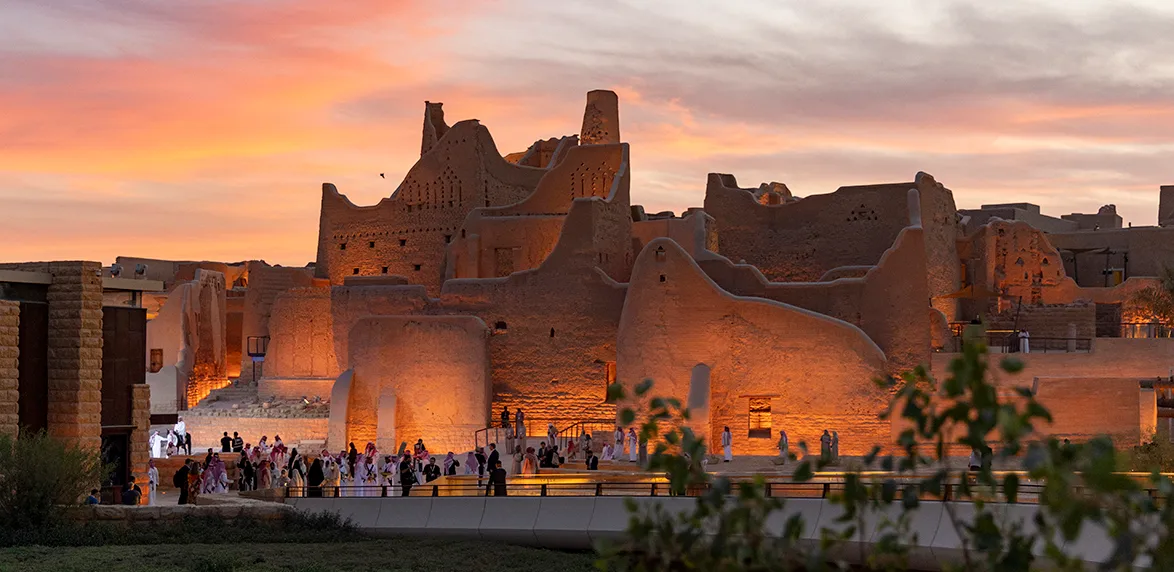
In the heart of the Arabian Peninsula, northwest of Riyadh, it stands as a witness to five centuries of history and authentic Najdi architecture.
15th Century CE — Date of Foundation
2010: UNESCO Inscription
Diriyah: The First Capital
The First Capital of the House of Saud
At-Turaif District lies in the heart of the Arabian Peninsula, northwest of Riyadh, and served as the first capital of the House of Saud. Founded in the fifteenth century CE, its walls and towers bear traces of the distinctive Najdi architectural style characteristic of central Arabia.
In the eighteenth and early nineteenth centuries, the district's political and religious role grew, and it became the center of Al Saud rule. In 1157 AH, Imam Mohammed bin Saud supported Sheikh Mohammed bin Abdulwahhab's call for religious renewal, making Diriyah the state's base and a seat of government and learning.
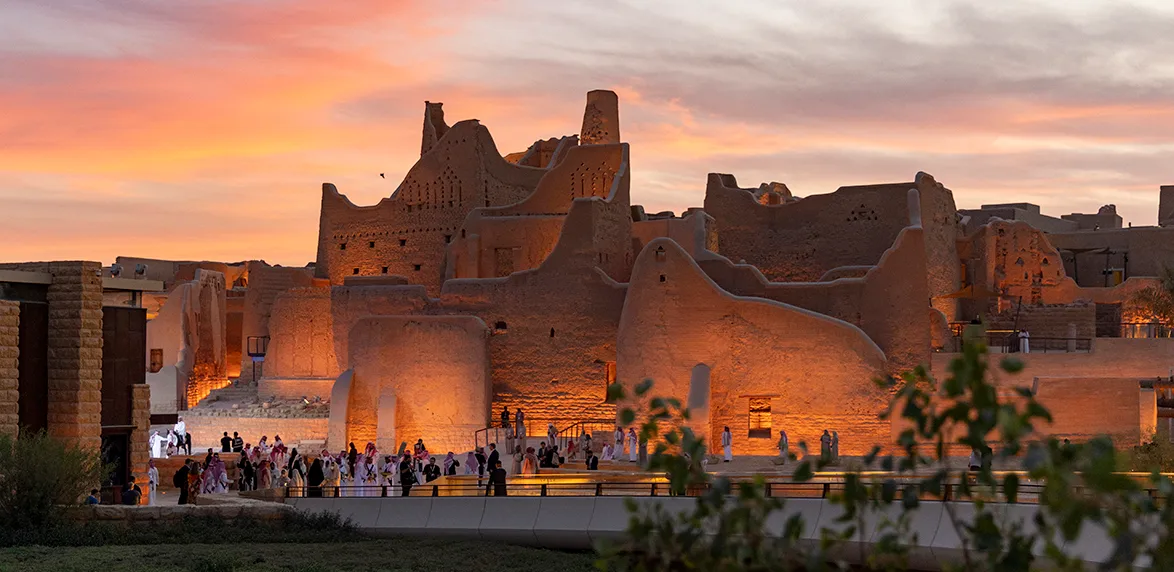
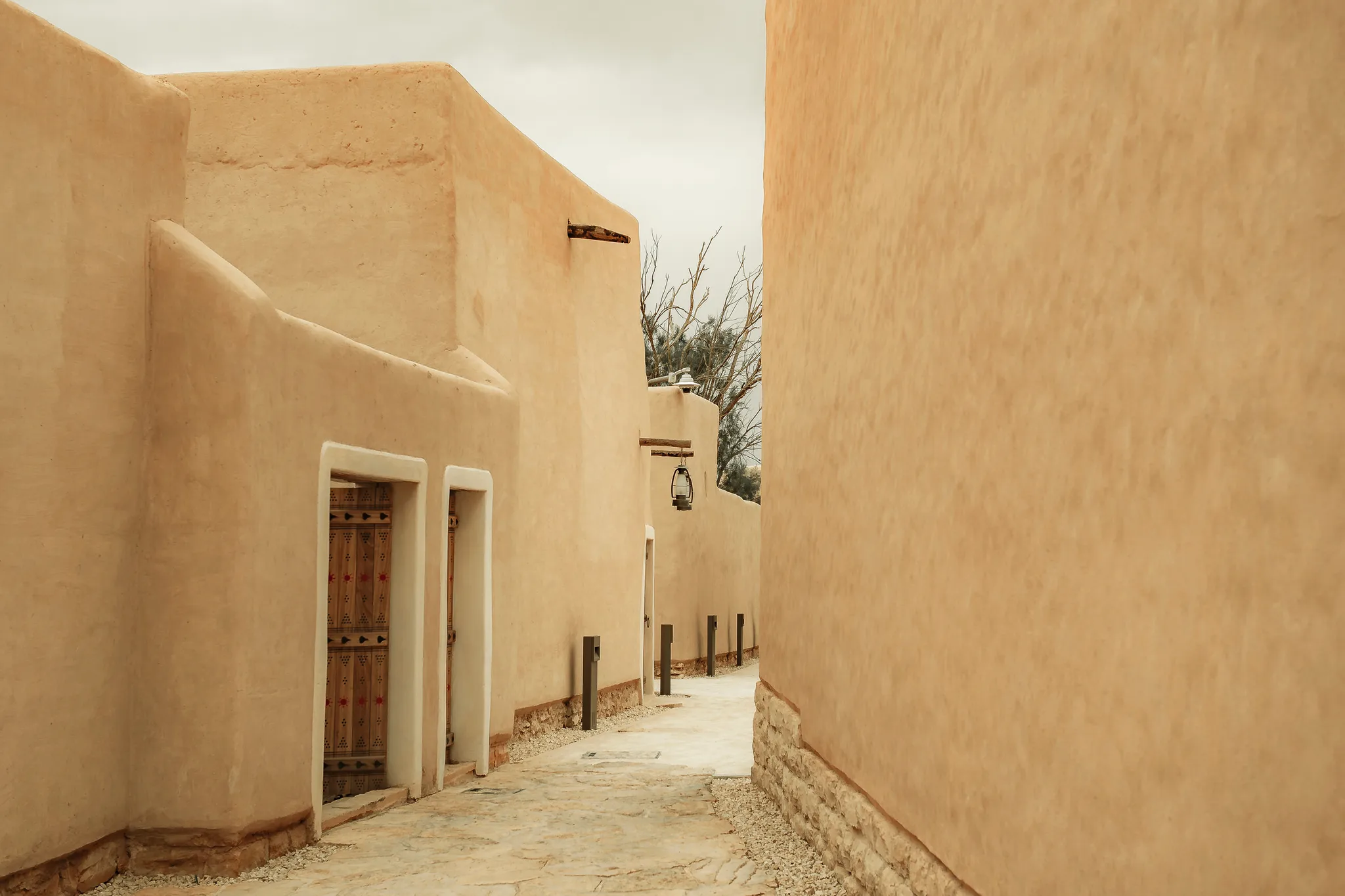
The property includes the remains of many palaces and a city built along the Diriyah oasis. Diriyah is one of the world's largest mud-built cities, its architecture embodying the deep-rooted civilization of Wadi Hanifah.
A Journey Through Time
The Foundation of Diriyah
Ibn Dir' invited his cousin Mani' Al Muraidi to come from Arud Najd to Wadi Hanifah. The newcomers settled between Ghusaybah and Al Mulaybid, founding Diriyah in 850 AH.
The First Saudi State
Imam Mohammed bin Saud supported the call for religious renewal, and Diriyah became the capital of the First Saudi State and a seat of government and learning.
Construction of Salwa Palace
Imam Abdulaziz bin Mohammed bin Saud founded Salwa Palace as a center of government and residence for the imams of the First Saudi State over four decades.
The End of the First Saudi State
Diriyah remained the capital of the First Saudi State until 1234 AH. Imam Turki bin Abdullah then chose Riyadh as the new seat of government in 1240 AH.
UNESCO Inscription
At its thirty-fourth session in Brasília, the World Heritage Committee approved At-Turaif District's inscription on the UNESCO World Heritage List.
Launch of the Development Project
King Salman bin Abdulaziz patronized the inauguration of the historic At-Turaif District development project, attended by leaders of the Gulf Cooperation Council countries.
A UNESCO World Heritage Site
The Second Saudi Site on the World Heritage List
In 2010, At-Turaif District was inscribed on the UNESCO World Heritage List, becoming the second Saudi site to receive this global recognition for its outstanding historical and civilizational value.
At-Turaif District sits atop the southwestern hill of Diriyah, prominently overlooking the rest of the city. It includes magnificent buildings that demonstrate local designers' engineering and construction skill, providing a living example of building methods from this historical period.
At-Turaif's Historic Treasures
At-Turaif District abounds with archaeological and historical landmarks telling the story of the First Saudi State and its rich civilization:
Salwa Palace
Diriyah's largest palace, covering more than 10,000 square meters, was founded by Imam Abdulaziz bin Mohammed bin Saud in 1765. It comprises seven architectural units and served as the seat of government during the First Saudi State.
At-Turaif Mosque, “The Grand Mosque”
At-Turaif Grand Mosque adjoins Salwa Palace to the east. The state's imams led Friday prayers there, and it served as the state's grand mosque.
Salwa Palace houses the Diriyah Museum, which presents the history and development of the First Saudi State through artworks, drawings, models, and documentaries. It also contains precious handwritten manuscripts and artifacts carrying stories of the past.
Distinctive Najdi Architecture
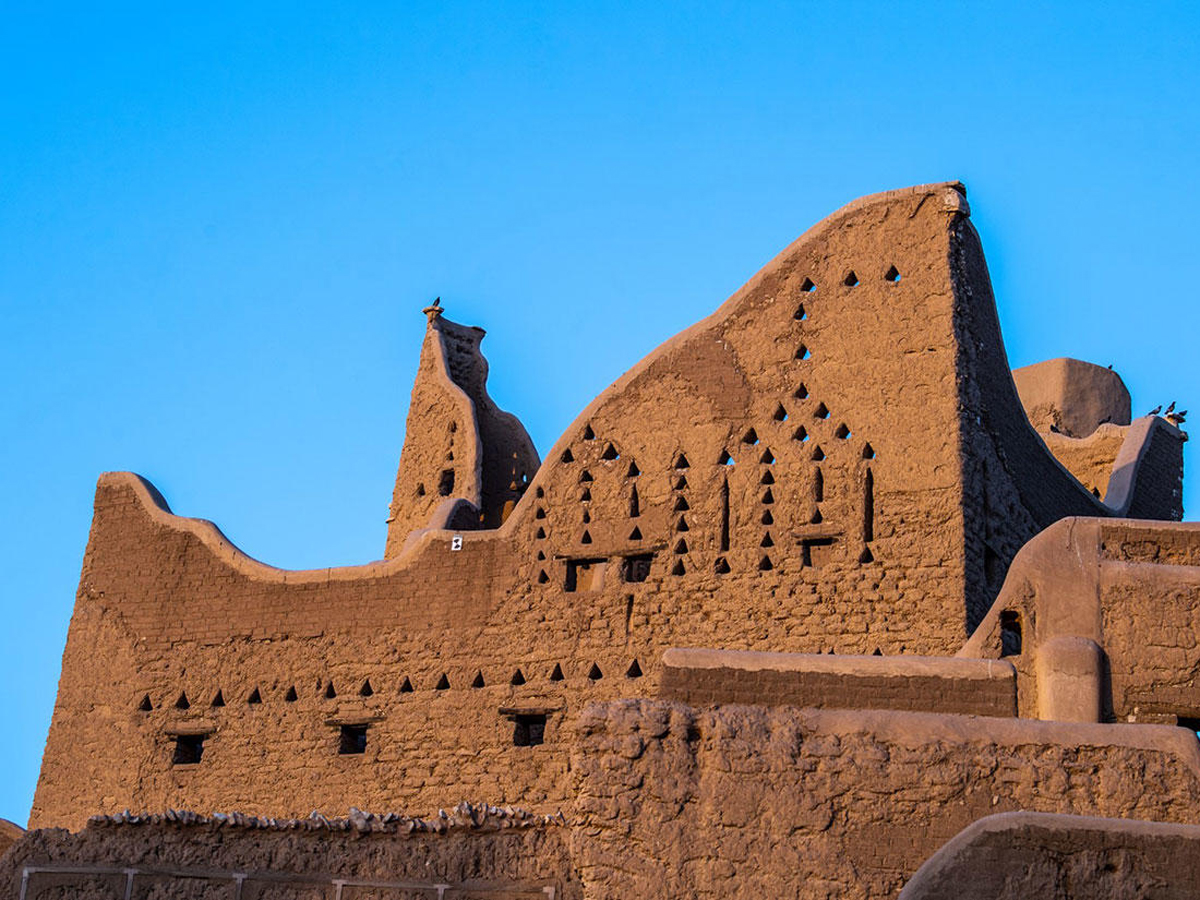
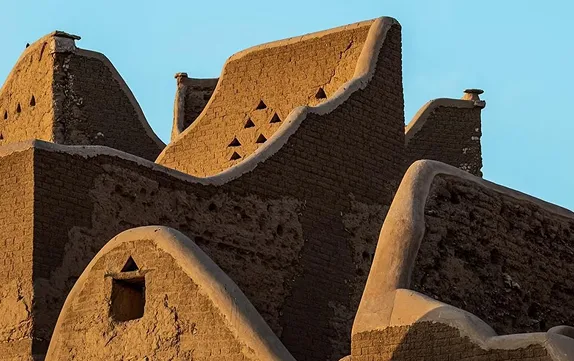
At-Turaif District is distinguished by its authentic Najdi architecture, a unique style native to central Arabia. Its buildings were constructed from local stone, timber, and mud bricks known as “labin,” using architectural methods suited to the desert environment and the life of the community at the time.
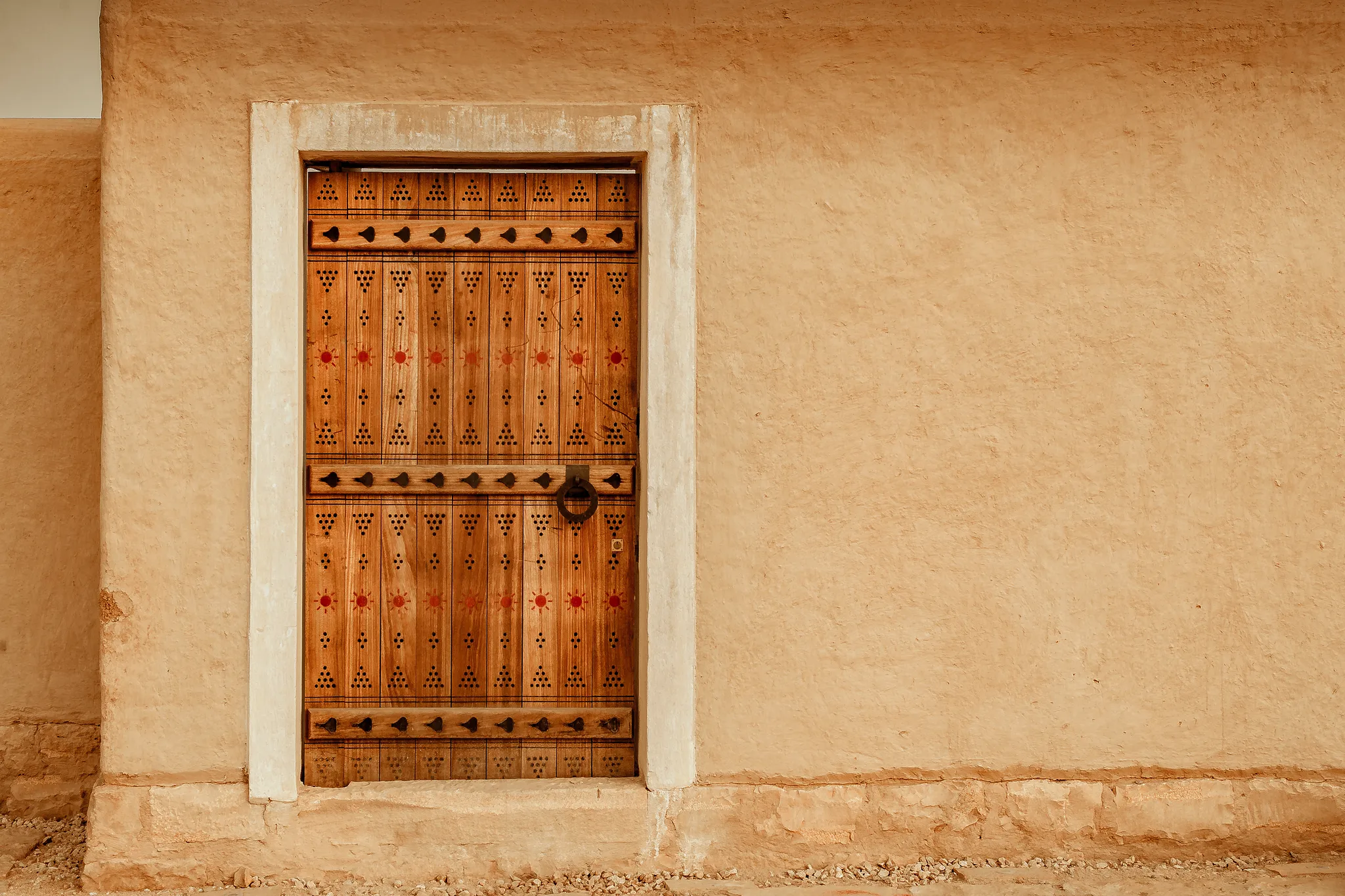
The skill of local builders is evident in the fine finishing: roofs, columns, canopies, courtyards, doors, windows, and decorative elements adorning the façades. The district represents a distinctive combination of architectural skills from Najd and surrounding areas throughout the period of Saudi rule.
Founded in the fifteenth century, At-Turaif District bears traces of the Najdi architectural style unique to central Arabia. Its political and religious role grew during the eighteenth and early nineteenth centuries, and it became the center of Al Saud rule.
Diriyah Gate — Vision 2030
Under Saudi Vision 2030, At-Turaif District stands at the heart of the vast Diriyah Gate project, overseen by the Diriyah Gate Development Authority (DGDA). The project aims to transform Diriyah into a world-class cultural, tourism, and entertainment district.
The Diriyah Gate Development Authority preserves and develops the heritage site, allowing visitors to recall the history of kings and heroes and explore the Kingdom's cultural and heritage resources up close. The city has been restored under UNESCO guidance, with cultural and entertainment experiences developed to highlight its civilization and traditions.
The project seeks to showcase history, lifestyle, and civilizational heritage through art exhibitions, museums, international restaurants and hotels, and educational and cultural facilities, all designed to celebrate the charm of historic Najdi architecture while drawing on contemporary advances in sustainable urban living.