
Rare First-Century AH Islamic Rock Inscription Discovered in Al Mahd Governorate
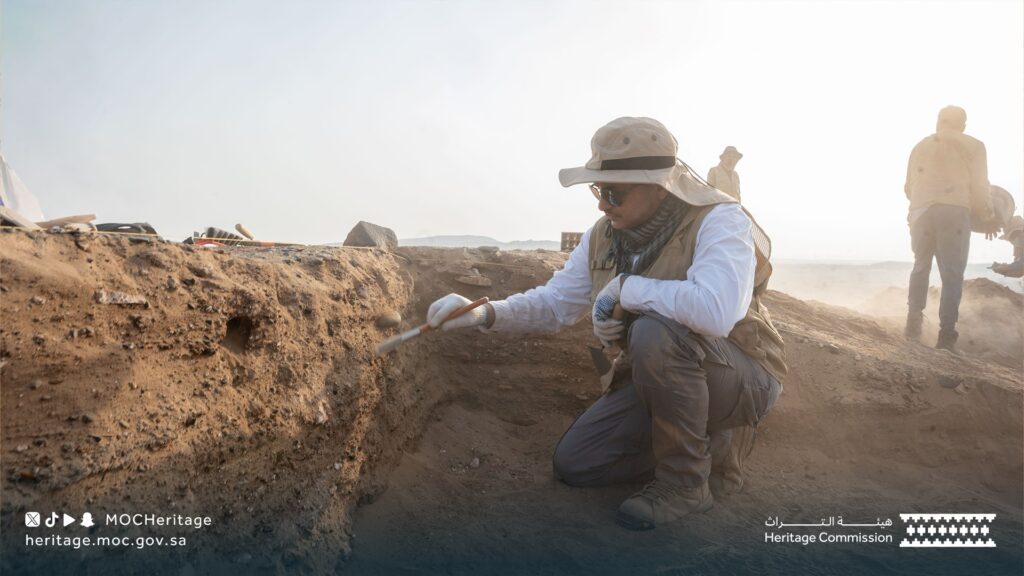
The Heritage Commission announces 1,774 archaeological discoveries during its second season in Al Mahd Governorate, led by a rare early Islamic rock inscription bearing a prayer in the name of Al-Farouq.
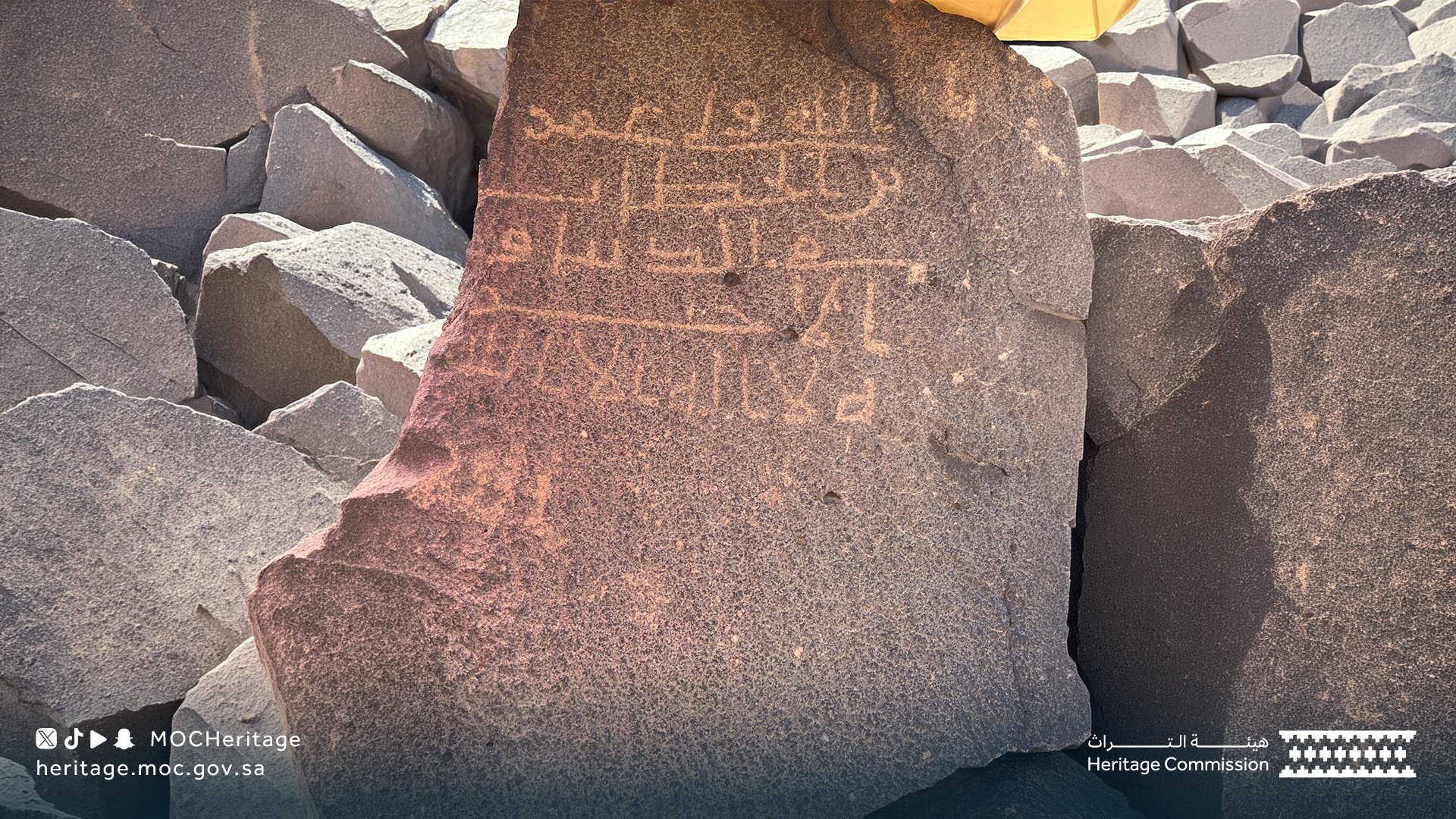
“God is the guardian of Umar ibn Al-Khattab in this world and the hereafter. There is no god but God.”
An Exceptional Discovery in Al Mahd Governorate
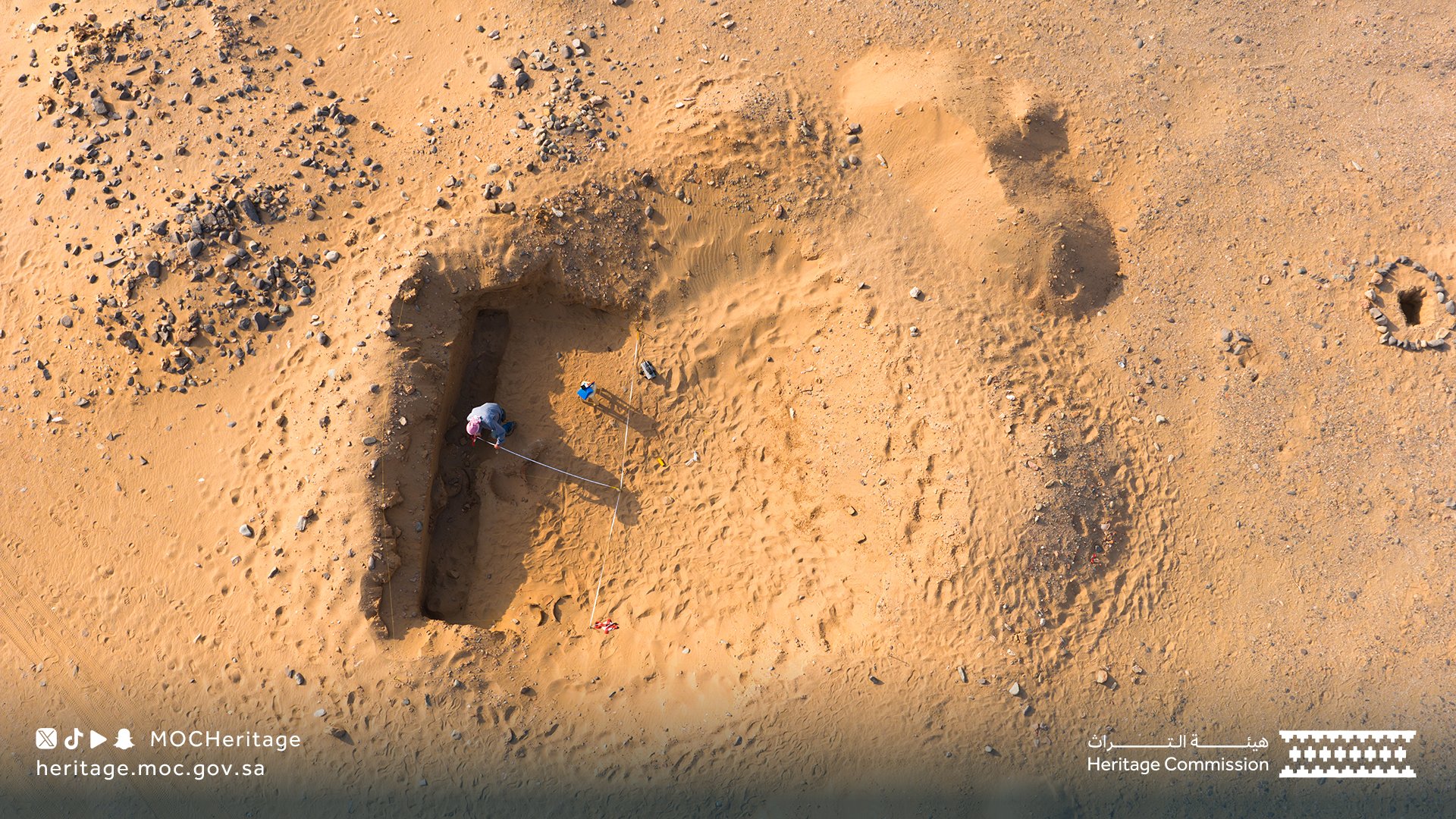
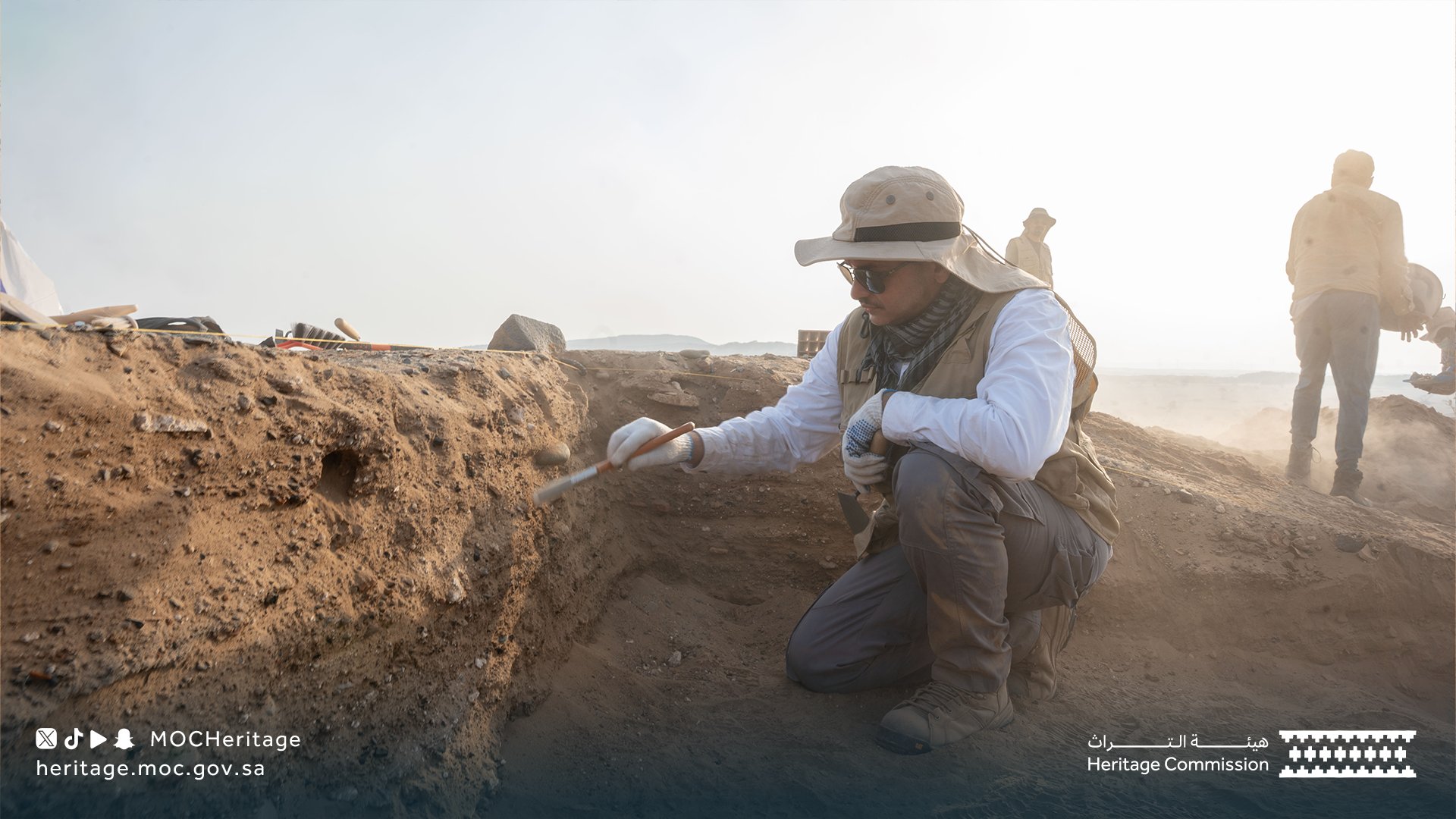
On June 9, 2026, Saudi Arabia's Heritage Commission announced the completion of its second archaeological survey season in Mahd Al Dhahab Governorate in the Madinah Region. The efforts documented 1,774 archaeological discoveries across Al Suwayriqiyah, Al Muwayhiyah, and Hadhah, revealing historical diversity extending from the early Islamic period to earlier eras.
The season's findings culminated in the discovery of a rare first-century AH rock inscription reading: “God is the guardian of Umar ibn Al-Khattab in this world and the hereafter. There is no god but God.” The Heritage Commission confirmed that the inscription dates to the early Islamic period, corresponding to the seventh century CE, and it was officially announced on June 11, 2026.
A Prayer Carved 1,400 Years Ago
“God is the guardian of Umar ibn Al-Khattab in this world and the hereafter. There is no god but God.”
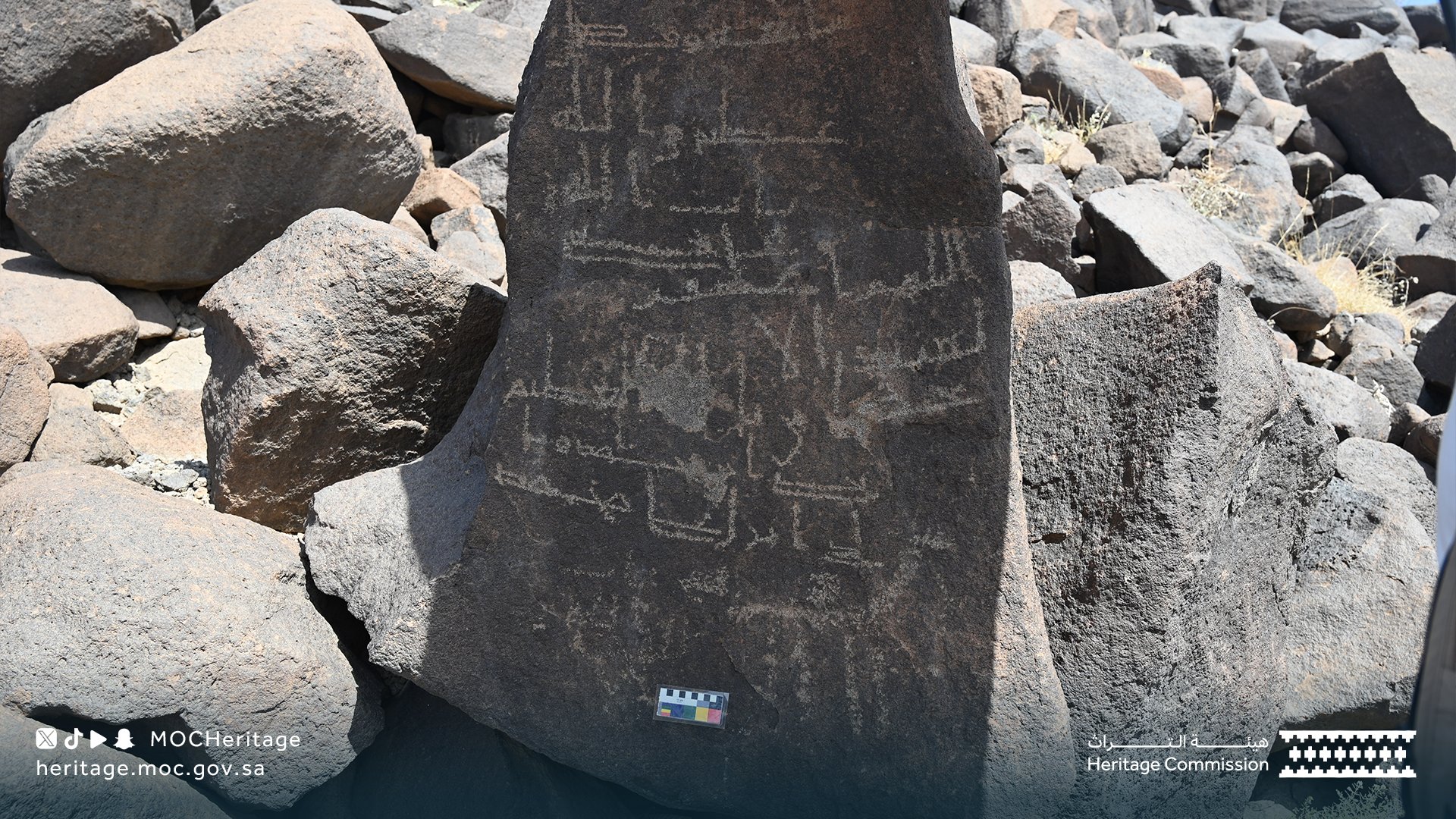
The rock inscription discovered in Al Mahd Governorate — First century AH / Seventh century CE
The words carved into the rock do more than mention a name; they form a prayer with a clear religious intention: acknowledging God as the guardian and protector of a particular person, Umar ibn Al-Khattab, and concluding with the declaration of faith. This style of writing was common in early Islam, when personal and public prayers were carved into rocks as enduring records of allegiance and faith.
Umar ibn Al-Khattab—may God be pleased with him—was the second Rightly Guided Caliph, serving from 634 to 644 CE. If the inscription was contemporary with his life, it dates precisely to that period, making it a rare material witness to an era from which few written documents survive.
1,774 Discoveries in One Season
1,774 Total Documented Archaeological Discoveries
156 Newly Registered Archaeological Sites
1,259 Documented Rock Drawings
The second season's findings covered two main areas in addition to Hadhah: Al Suwayriqiyah and Al Muwayhiyah. They revealed objects originating in the Levant, Egypt, and Ethiopia, reflecting the cultural diversity of pilgrims who passed through the site over the centuries.
📜 Islamic Inscriptions: 461 inscriptions from various Islamic periods, most notably the first-century AH inscription bearing Umar ibn Al-Khattab's name
🗿 Thamudic Inscriptions: 34 inscriptions. Ancient pre-Islamic inscriptions associated with the Thamudic civilization that flourished in northwestern Arabia
🏛️ Stone Structures and Palaces: 11 structures + 3 palaces. Archaeological buildings and palaces revealing patterns of human settlement in the region through the ages
🛤️ Caravan Routes and Historic Wells: 2 routes + 4 wells. Two historic caravan routes and four historic wells bearing witness to the movement of trading caravans and pilgrims
Why Is This Discovery So Important?
A Rare Material Record from Early Islam
The first century AH left researchers insufficient surviving writing on paper or parchment; rock inscriptions were among the records most likely to endure. Every new inscription added to this archive offers an opportunity to understand how Arabic was written at that time.
Al Mahd Governorate and its surrounding area lie along ancient caravan routes and historic pilgrimage roads, explaining the region's wealth of inscriptions from pre-Islamic times to the medieval Islamic period. The findings also revealed objects originating in the Levant, Egypt, and Ethiopia, demonstrating that the site was a cultural crossroads for pilgrims from different regions.
The site of Al Juhfah, mentioned in the same context, points to the area's connection with the route of the Prophet's migration. Located approximately 187 kilometers northwest of Makkah, it is one of the Islamic miqat locations known since early Islam.
Saudi Arabia Is Redrawing the Archaeological Map
The Vision 2030 Framework — Heritage as a Cultural and Economic Pillar
These efforts are part of Heritage Commission programs to explore, document, and preserve historical sites, strengthening knowledge of the Kingdom's cultural legacy and supporting Vision 2030 targets.
Under Saudi Vision 2030, the Heritage Commission continues archaeological survey and excavation programs using the latest scientific methods and involving local and international experts. In April 2026 alone, it registered 1,414 new archaeological sites in the National Antiquities Register, covering all regions of the Kingdom.
This discovery reinforces the Heritage Commission's consistent message: beneath the Kingdom's soil lies an exceptional civilizational heritage stretching back thousands of years, and what has been uncovered so far is only the beginning of the journey to explore, document, and present it to the world.