
Vision 2030's Most Notable Achievements After Six Years
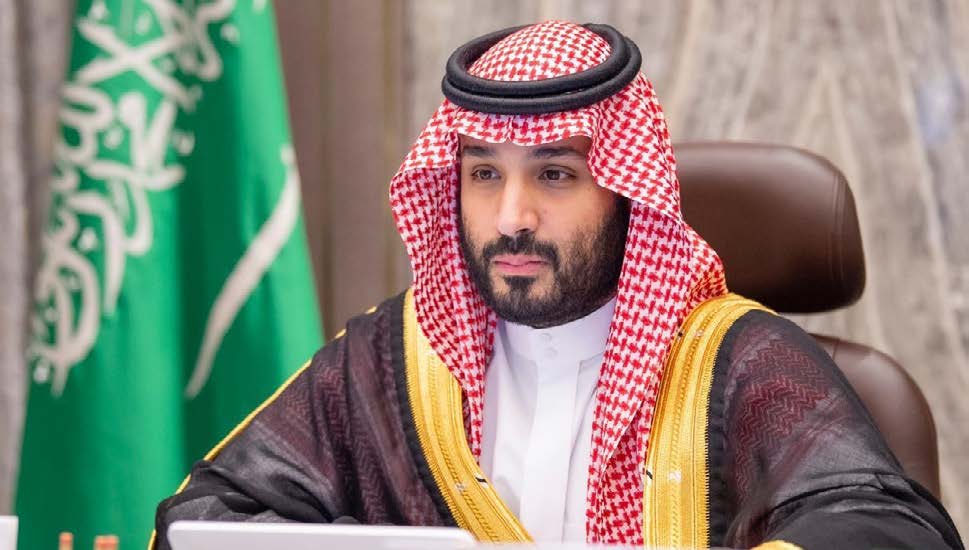
Prince Mohammed bin Salman affirmed that Saudi Vision 2030's realization programs had delivered exceptional achievements
Prince Mohammed bin Salman bin Abdulaziz, Saudi Crown Prince and Prime Minister, affirmed that Saudi Vision 2030's realization programs had delivered exceptional achievements and addressed structural challenges in just six years. The Crown Prince expressed his gratitude to the Custodian of the Two Holy Mosques, King Salman bin Abdulaziz Al Saud, for the substantial support and close attention given to Vision 2030.
He also expressed appreciation for the efforts of all government entities in overcoming numerous challenges during the preceding period, praising the invaluable experience gained, which strengthened confidence in achieving the Vision's objectives. He emphasized that much remained to be done on all fronts to continue achieving Saudi Vision 2030 as hoped and required. The Council of Economic and Development Affairs reviewed the Vision's achievements five years after its launch. Its initial years focused on establishing enabling infrastructure, building institutional and legislative structures, setting public policies, and empowering initiatives. The next phase would focus on monitoring implementation, accelerating delivery, and increasing participation by citizens and the private sector. The review was organized around the Vision's three themes, as follows:
First: A Vibrant Society. The Council reviewed achievements aimed at enhancing quality of life in a distinctive, attractive environment that positions the Kingdom as a leading global destination. These included improving access to emergency healthcare within four hours to more than 87%, compared with 36% before the Vision's launch; reducing annual road-traffic deaths to 13.5 per 100,000 people from 28.8; and increasing the proportion of people exercising at least once a week to 19% in 2020, compared with 13% before the Vision. It also reviewed major housing-sector achievements: homeownership rose to 60% from 47% five years earlier, while access to housing support became immediate, compared with waits of up to 15 years before the Vision's launch.
Archaeological and heritage sites. The Council examined indicators of growing attention to archaeological and heritage sites, which directly contributed to the inscription of new Saudi sites on the UNESCO World Heritage List. The number of heritage sites open to visitors rose to 354 in 2020, from 241 in 2017. It also addressed efforts to strengthen Saudi identity and its global presence. The number of intangible cultural heritage elements inscribed with UNESCO reached eight, up from just three before the Vision's launch, while architectural heritage sites recorded in the National Cultural Heritage Register reached 1,000 in 2020, compared with only 400 in 2016.
The Council also discussed how Saudi Vision 2030 programs increased capacity to welcome pilgrims through expansion of the services ecosystem at the Two Holy Mosques and the holy sites, and automation of Umrah visa issuance, reducing the process from 14 days to just five minutes. The electronic tourist visa was also launched, obtainable online within minutes, facilitating visits to the Kingdom's tourist attractions, antiquities, and heritage. This helps stimulate tourism, increase its contribution to GDP, develop numerous and diverse destinations, and generate jobs for Saudi men and women. The Kingdom's tourism sector consequently became the fastest-growing in the world, recording 14% growth. Sports, culture, and entertainment. The Council reviewed the contribution of Vision programs over the preceding five years to improving quality of life by attracting and organizing renowned international sporting events and successfully launching entertainment events. More than 2,000 sports, cultural, and volunteering events were held, attracting over 46 million visitors through 2020. This doubled the number of companies operating in entertainment to more than 1,000, helping create over 101,000 jobs by the end of 2020.
It also reviewed achievements in environmental conservation, sustainability, and protection, including the creation of seven royal nature reserves in 2018 and 2019 to conserve plant and animal species and serve as living genetic repositories. The Kingdom achieved global milestones in desalinated water production, leading worldwide output through the Saline Water Conversion Corporation's peak production capacity of 5.9 million cubic meters per day in 2020. Replacing thermal technologies and expanding environmentally friendly technologies helped reduce carbon dioxide emissions by 28 million tonnes annually. The same period saw the announcement of major environmental conservation projects, most recently the Saudi Green and Middle East Green initiatives, which aim to increase vegetation cover, reduce carbon emissions, combat pollution and land degradation, and conserve marine life.
Second: A Thriving Economy. The Council reviewed initiatives to create an environment that supports business potential and broadens the economic base. Public Investment Fund assets multiplied to approximately SAR 1.5 trillion in 2020, from no more than SAR 570 billion in 2015. It is worth noting that international foreign investment flows had declined by 58% since 2015, while foreign direct investment inflows into Saudi Arabia grew to SAR 17.625 billion, a reported increase of 331%, from SAR 5.321 billion before the Vision's launch. The initiatives also included launching major projects to contribute to societal well-being, create jobs, and attract global investment, notably NEOM, Qiddiya, the Red Sea projects, and others.
The Council reviewed financial-sector development achievements, including the inclusion of the Saudi Exchange, Tadawul, in the MSCI and S&P Dow Jones emerging-market indices. This made it easier for foreign investors to invest in Saudi Arabia, with the value of their market holdings increasing by 195.9% to SAR 208.3 billion by the end of 2020, representing 12.8% of the total value of shares.
Fintech Saudi was also established to open financial services to new types of financial technology participants and develop fintech-focused funds, accelerators, and incubators that provide venture capital and equity financing and stimulate the entrepreneurial environment. These achievements helped make the Saudi Exchange, Tadawul, one of the world's ten largest capital markets. SAR 897 billion. The Council also reviewed the National Debt Management Center's performance: in the five years since its establishment, the center had supported the Kingdom's general budget with approximately SAR 897 billion. It discussed achievements in creating future jobs and supporting innovation by assisting SMEs as a key driver of economic growth. Notable milestones included the Kingdom reaching 12th place in venture capital availability in the 2020 Global Competitiveness Report and third globally for protecting minority investors. The Kingdom also rose to 24th globally in the 2020 World Competitiveness Report, from 39th in 2018. Saudi women's labor-force participation increased to 33.2% in 2020 from 19.4% in 2017, alongside the development of laws protecting and enhancing their personal and professional rights.
Rising non-oil revenues. The Council discussed accelerated growth in non-oil GDP as a share of total GDP, reaching 59% in 2020 from 55% in 2016. Non-oil revenues rose to SAR 369 billion in 2020 from SAR 166 billion in 2015, a reported increase of 222%, while the number of factories increased by 38% to 9,984, compared with 7,206 before the Vision's launch. This coincided with pioneering initiatives, including the Made in Saudi program, the Shareek program to strengthen private-sector partnerships and accelerate GDP growth, the establishment of the Saudi Export-Import Bank, and the launch of the Mining Investment Law. In the digital economy, the Council reviewed initiatives that placed the Kingdom first in digital competitiveness among G20 countries and first globally for 5G internet speed. Coverage reached more than 60% of major cities and 45% of other cities through the deployment of over 12,000 5G towers. The Kingdom ranked sixth among G20 members in the International Telecommunication Union's Global Cybersecurity Index. Fiber-optic coverage expanded to 3.5 million urban homes in 2020, up from 1.2 million in 2017, while the Kingdom attracted the largest technology investments in the Middle East and North Africa, with cloud-computing deals exceeding SAR 6 billion.
In energy, the Council reviewed major national and international achievements since the launch of Vision 2030. The Kingdom established the OPEC+ group of oil producers, which achieved a historic milestone in 2020 by implementing the largest production cut ever seen in the oil market. This helped restore stability and balance to global markets and address the impact of the coronavirus pandemic on the global economy. The Kingdom also promoted the circular carbon economy concept, adopted by the G20, demonstrating its commitment to environmental protection and combating climate change within the framework of the Paris Agreement and relevant international accords. Energy for more than 600,000 homes. The first project under the Custodian of the Two Holy Mosques' Renewable Energy Initiative, the Sakaka power plant, was inaugurated, and additional solar power projects were announced across different regions. Some set new world records for the lowest purchase price of solar-generated electricity.
The projects' combined capacity was estimated at more than 3,600 megawatts, enough to supply over 600,000 homes, alongside a number of clean-energy projects for hydrogen and ammonia production.
Renewable energy projects will diversify the electricity generation mix, with renewables and gas each accounting for 50% by 2030, displacing approximately one million barrels of oil equivalent of liquid fuel. The electricity sector also took clear, deliberate steps to enhance efficiency, effectiveness, and sustainability through restructuring, a new Electricity Law, and the reorganization of the Water and Electricity Regulatory Authority. More than ten million smart electronic meters were installed as a step toward sector digitalization. Saudi Arabia's oil industry also saw approval for the development of the giant Jafurah natural gas field, the discovery of five new oil and gas fields, and continued integration of the petroleum and petrochemicals sectors.
63 universities and colleges. The Council also reviewed how Vision programs helped create an environment that develops skills and sustains investment in education and training. The number of universities and colleges reached 63, while published scientific papers totaled 33,588, compared with 15,056 in previous years, a reported increase of 223%. Kindergarten enrollment rose to 23%, from 13%.
It examined progress in localizing military industries, with Vision 2030 programs raising the sector's localization rate to 8% by the end of 2020, from 2% in 2016. For the first time in the Kingdom's history, a licensing program for military industry activities was launched, granting 142 establishment licenses to 91 local and international companies.
Third: An Ambitious Nation. As part of improving regulations and services and expanding communication channels between government bodies, citizens, and the private sector, the Council reviewed initiatives that brought major improvements in government effectiveness. These included issuing more than 197 legislative instruments across various fields, encompassing laws, regulations, bylaws, and organizational arrangements. Digital government service maturity rose to 81.3%, compared with 60% in 2017, contributing significantly to better services for citizens and residents.
The Council reviewed progress in promoting integrity and combating corruption. A culture of accountability had become firmly established within government and among citizens. The public treasury recovered a total of SAR 247 billion through anti-corruption settlements over the preceding three years, representing 20% of total non-oil revenues, in addition to non-cash assets worth tens of billions transferred to the Ministry of Finance.
Employment for more than 422,000 Saudi men and women. The Council also reviewed qualitative advances in the justice system. Enforcement courts' case completion rate increased to 82% and personal status courts' to 59%, alongside stronger specialized courts, the implementation of two-tier litigation, and electronic litigation. More than 10 million court hearings were held between 2015 and 2020, compared with 2.7 million between 2009 and 2014. Powers of attorney issued rose to 11 million between 2015 and 2020, compared with 2.2 million between 2009 and 2014.
Saudization agreements were also launched and signed with various supervisory bodies to increase localization rates across sectors. These agreements resulted in the employment of more than 422,000 Saudi men and women from the beginning of 2019.
The Council discussed achievements in the nonprofit sector and social responsibility. In 2020, the number of volunteers reached 409,123, participating in more than 156,000 volunteering opportunities, compared with 23,000 volunteers in 2016. The volunteering platform had 533,950 registered volunteers, and the economic value of an individual's volunteering increased from SAR 0.6 per hour in 2016 to SAR 21.27 per hour. The Council also addressed the provision of suitable housing for social security beneficiaries and those in equivalent circumstances, through ownership or usufruct arrangements, in partnership with the nonprofit sector and more than 350 associations. More than 46,000 homes were secured across the Kingdom. The Jood Housing platform was launched to involve society in charitable housing support through a trusted platform in cooperation with 121 charities. It supported more than 23,000 people, with community contributions exceeding SAR 400 million across two tracks: providing housing and supporting those unable to pay rent. The next phase of Saudi Vision 2030. The Council adopted recommendations necessary to move into the next phase, which began in early 2021 and continues through 2025, focused on accelerating delivery and maintaining the momentum needed to continue reforms. These included developmental updates to Vision realization programs to ensure alignment with targets, improve spending efficiency, and respond to economic developments through three main areas:
The first involves restructuring some existing programs and establishing others to meet the next phase's requirements, such as the Health Sector Transformation Program, which aims to restructure the sector into a comprehensive healthcare system that fulfills the Vision's aspirations.
The second area of developmental updates focuses on making some program implementation schedules more flexible, prioritizing initiatives, and enabling changes related to legislative policies.
The third involves transferring initiatives from the National Character Enrichment, National Companies Promotion, and Strategic Partnerships programs to the relevant programs and entities, after these programs achieved most of their objectives in the Vision's first five years and no longer needed to remain independent in the next phase. The next phase of Vision 2030 will also continue developing promising and emerging sectors and accelerating Vision realization program delivery to strengthen economic growth, support local content and its contribution to the Kingdom's economic development, and facilitate the business environment. It will further enhance the role of citizens and the private sector by empowering them to use their capabilities and invest their potential to achieve greater success and progress.