
King Salman International Airport: Riyadh's gateway to a new global economy
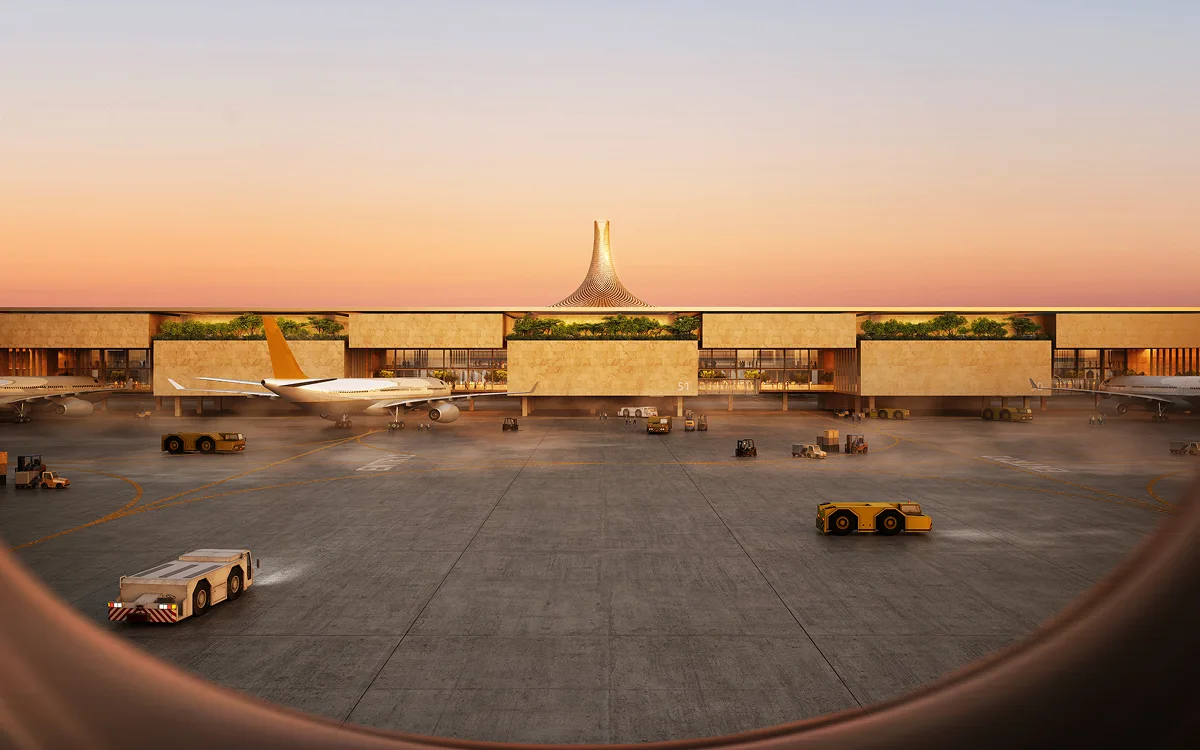
King Salman International Airport
In major cities, an airport is no longer merely a point of arrival and departure; it has become part of their economic infrastructure and their image before the world. From this perspective, the King Salman International Airport project in Riyadh reflects the Kingdom's ambition to build a global hub for transport, trade, and tourism, and to strengthen the capital's standing among the world's largest urban economies.
📐 57 km²: Approximate Area
🛫 6 Runways: Parallel Runways
🧳 120 Million: Target Passengers in 2030
💼 103,000: Expected Jobs
📊 SAR 27 Billion: Annual Contribution to Non-Oil GDP
🏗️ A Project on the Scale of the Transformation
The master plan for King Salman International Airport was announced in November 2022. It will be developed on the site of the existing King Khalid International Airport, incorporating the current terminals into the new project as the King Khalid Terminals. According to the Public Investment Fund, the project covers approximately 57 square kilometers and includes six parallel runways, alongside around 12 square kilometers of support, residential, leisure, commercial, and logistics facilities.
These dimensions show that the project aims not merely to create a vast passenger building, but to establish an integrated aviation ecosystem. The airport will function as an interconnected economic city, bringing together passenger and cargo traffic, services, hospitality, retail, and business, opening up new activities and investments in the capital.
✈️ Capacity to Match Riyadh's Growth
Riyadh is entering a period of rapid population, urban, and economic growth, alongside expanding tourism, entertainment, and business sectors and the hosting of international events. King Salman International Airport therefore aims to serve up to 120 million passengers annually by 2030, rising to 185 million annually by 2050, and handle up to 3.5 million tonnes of cargo a year.
This capacity will give Riyadh greater ability to welcome visitors, businesspeople, delegations, and exhibition and conference participants. It will also support transit between Asia, Africa, and Europe, benefiting from the Kingdom's geographic position at the heart of global trade and travel routes.
📈 A Driver of the Non-Oil Economy
The airport's true value lies in its anticipated impact beyond aviation. According to the announced plan, the project is expected to contribute approximately SAR 27 billion annually to non-oil GDP and create around 103,000 direct and indirect jobs.
These opportunities will span many fields, from airport operations and aviation services to logistics, technology, security, cybersecurity, hospitality, retail, maintenance, and engineering. The project could also encourage global companies to establish regional headquarters in Riyadh, thanks to easy access, extensive air connectivity, and integrated infrastructure.
📦 A Link for Trade and Supply Chains
Supply-chain resilience has become central to economic competitiveness. With a target capacity of millions of tonnes of cargo, King Salman International Airport will play an important role in supporting e-commerce, high-value industries, express freight, and pharmaceutical and food products.
The private sector will benefit from logistics zones and support facilities around the airport, reducing cargo transit times and improving distribution efficiency inside and outside the Kingdom. This complements the National Transport and Logistics Strategy, which seeks to establish the Kingdom as a global hub connecting three continents.
🌍 A Gateway for Tourism and International Events
The Kingdom is investing in diverse cultural, tourism, and entertainment destinations, from Diriyah and Qiddiya to AlUla and the Red Sea, while Riyadh is expanding its seasons, exhibitions, conferences, and sporting championships. The airport will be a principal gateway for visitors to these experiences.
The project becomes even more important as Riyadh prepares to host major global events, led by Expo 2030. Their success depends not only on the quality of the event itself, but on a complete experience beginning when visitors arrive, encompassing easy procedures and transport as well as services and hospitality.
🇸🇦 A Saudi Experience with Global Standards
The announced airport concept includes a seamless travel experience built on innovation and operational efficiency, with a clear Saudi identity in its design and services. This balance of technology and culture gives the airport an opportunity to introduce visitors to the Kingdom from their first moment.
Digital solutions are expected to play a central role in managing passengers, baggage, and flights, simplifying travel procedures, and improving service standards. Data and artificial intelligence are also expected to improve efficiency, reduce waiting times, and enhance the passenger experience.
🌱 Sustainability at the Heart of Design
The project targets LEED Platinum certification for environmentally friendly projects and aims to be supported by renewable energy resources. This reflects a global shift toward airports that use energy and water more efficiently and have a smaller environmental impact.
Sustainability extends beyond buildings to integrated planning for transport, services, and surrounding facilities. Effective links to public transport and city networks can reduce congestion, improve traffic flow, and make the airport a connected part of Riyadh's urban fabric.
👥 Investing in People and Skills
Operating a project of this scale will require qualified Saudi professionals in aviation, engineering, logistics, hospitality, and advanced technologies. This highlights the role of universities, institutes, and training programs in preparing a new generation of specialists and enabling young men and women to help shape the future of air transport.
The growth of airport-related companies and services will also transfer knowledge, develop skills, and create new career paths beyond traditional aviation jobs.
🌐 Bringing Riyadh Closer to the World
King Salman International Airport represents more than an infrastructure project; it is an economic and urban commitment to Riyadh's future. Its substantial capacity, international connectivity, and logistics and commercial facilities can strengthen the capital's ability to attract investment, tourism, talent, and business.
When economic ambition meets Saudi identity, sustainability, and technology, the airport becomes a gateway through which passengers enter Riyadh and the capital advances toward a more influential place in the global economy.
Explore the Project's Impact
🌍 Why Is It a Global Gateway?
The airport benefits from the Kingdom's location between Asia, Africa, and Europe, strengthening travel, trade, and transit between East and West.
📦 How Does It Support Logistics?
It provides integrated infrastructure for freight, warehousing, and distribution, improving the efficiency of supply chains, e-commerce, and high-value industries.
🌱 Where Does Sustainability Come In?
The project targets LEED Platinum certification, the use of renewable energy, and an ecosystem that uses resources more efficiently.
“The airport is not merely an arrival point; it is an economic and urban ecosystem through which Riyadh reaches out to the world.”
Sources: Public Investment Fund: King Salman International Airport Master Plan. Saudi Press Agency: Official statements on the airport's role in transport and tourism.